13 August 2002 at 16:03
David’s Empty Page
[David Zetterberg](entity:character-recall-character-david-zetterberg-1ff22148d2da) tried to write a new comedy routine while his attention kept returning to Duane Hanson’s [Supermarket Lady](entity:object-recall-object-supermarket-lady-5d7c4903319f), the figure he used as a private emblem of social failure. A newspaper photograph of two politicians protesting pornography gave him an uneasy opening for a joke, but he feared the joke exposed how little conviction lay behind his work.
He paused to help his son with Pokémon cards and admitted that he did not really know why audiences laughed. The strain of being an entertainer, husband, and father was already showing before the extraordinary night began.
13 August 2002 at 16:30–21:00
The Family’s Ordinary Evening
[Eva Zetterberg](entity:character-recall-character-eva-zetterberg-746323515807) felt terrible after work and at home with her family trying to go about their usual lives. [David](entity:character-recall-character-david-a0465b0b2f3d) cooked dinner, joking about the hot weather, and played Monopoly with Eve and [Magnus](entity:character-recall-character-magnus-098304000edd); behind these domestic routines, he constantly imagined how easily his perfect life would be taken away
13 August 2002 at about 22:49
Henning’s Cemetery Vision
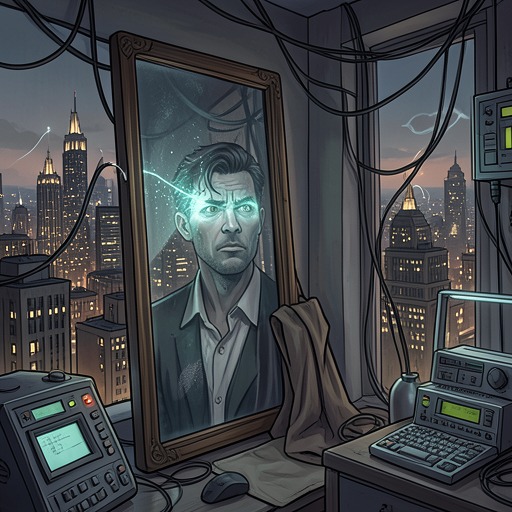
Henry was drunk and tormented by the stifling heat and electrical pressure of the city. The lights and appliances were turned off; with the invisible electric field growing stronger, everyone felt like they were being squeezed painfully
13 August 2002 at about 21:05
The Rats on the Bridge
[David](entity:character-recall-character-david-a0465b0b2f3d) travels on his way to Noarborn, where he sees two small mice attacking one large mouse on the Saint Erik Bridge. The large mouse screams and bleeds as it is caught in the grip of the two attackers who flip over the railing together. The bystanders look at the scene with an
13 August 2002 at about 21:05–22:00
The Failed Comedy Show
In Nola Brunen, the club's lights were too bright and the audience was in pain from headaches; even Ben Linn's jokes failed to elicit laughter. The microphone's screeching became unbearable; a woman smashed the microphone on the floor, and the shriek and performance ended
13 August 2002 at 22:36 and shortly after
Eva’s Death and Return
[David](entity:character-recall-character-david-a0465b0b2f3d) discovers Eve dead in the hospital bed; she was severely injured on her face and chest in an accident with a deer. He clutches her hand and speaks, as if refusing to accept reality could reverse things. Nurse Mariana also has a headache, seemingly aware of how large the disaster around them
13 August 2002 before 22:30
Mahler’s Grief
[Gustav Mahler](entity:character-recall-character-gustav-mahler-d6f10fb0d72a) visits his daughter [Anna](entity:character-recall-character-anna-ea2421a71401); Anna is devastated by the death of her young son [Elias Mahler](entity:character-recall-character-elias-mahler-21ce216b7409) who fell from the stairs. She lies on [Elias](entity:character-recall-character-elias-a05c0dc697ed)'s bed and cannot bear to smell his scent anymore. Mahler brings food and tries to comfort her, then returns alone to the apartment
13 August 2002 in the evening
The Sense in the Garden
In Taibei City Town, Elvira Lundberg and her granddaughter [Flora](entity:character-recall-character-flora-c1b11a6eb9e1) sense an ominous aura in the air. They possess an unusual sensitivity called perception, which allows them to detect traces of people's emotional states and lingering echoes from terrible events. They often discern others' hidden pain
13 August 2002 shortly before 23:00
The Pressure Breaks
[Stockholm](entity:location-recall-location-stockholm-ecdf20d7e75e)'s lights grew brighter everywhere, the headache intensified, and appliances couldn't be turned off no matter how they were shut down. [David](entity:character-recall-character-david-a0465b0b2f3d)'s pain worsened beside Eva's bed, while everyone in the city was bearing an invisible collective pressure
13 August 2002 at about 23:10
The Old Dead Awaken
Dandule Hospital mortuary where the corpses started moving and struggling to escape from their storage area began to move. The administrator Ludwig called his old acquaintance, journalist [Gustav Mahler](entity:character-recall-character-gustav-mahler-d6f10fb0d72a), who was a close friend of his, to report that the deceased had awakened. Initially, Mahler did not believe
14 August 2002 shortly after midnight
Tore Returns Home
Erville had already made the bed for [Flora](entity:character-recall-character-flora-c1b11a6eb9e1) in her husband's room that night when she heard scratching outside. In the dark, Erville got up and went to open the door. Tré was standing at the door, dressed in his coffin clothes, stiff and cold, with no trace of
14 August 2002 at about 23:46
Mahler Enters the Morgue
[Gustav Mahler](entity:character-recall-character-gustav-mahler-d6f10fb0d72a) meets Ludwig outside the hospital and pays him to bring himself into the morgue. Inside, a startled nurse is holding an agitated, desperate old woman who wants to go home. Mahler refuses to take over from the nurse; her disdainful glance reveals that he instinct
14 August 2002 shortly after midnight
Mahler Digs for Elias
In the Laxsta Cemetery, Mahler crawled into [Elias](entity:character-recall-character-elias-a05c0dc697ed)'s new grave with his bare hands and dug through the dry earth. He heard scraping sounds below him, fearing that Elias was trapped in the dirt. Exhausted and nearly unable to support himself, he forced himself to continue digging
14 August 2002 between 23:20 and 02:00
The Crisis Becomes Official
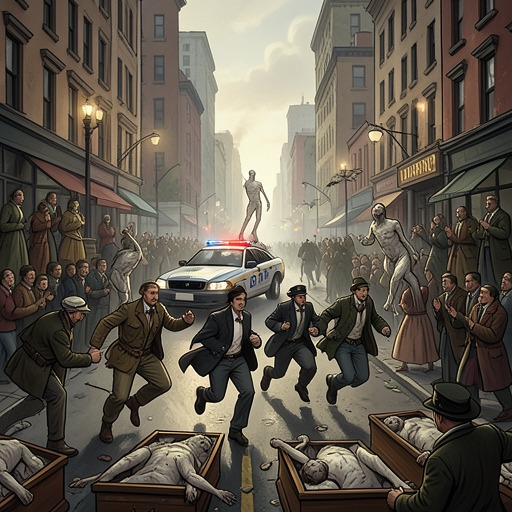
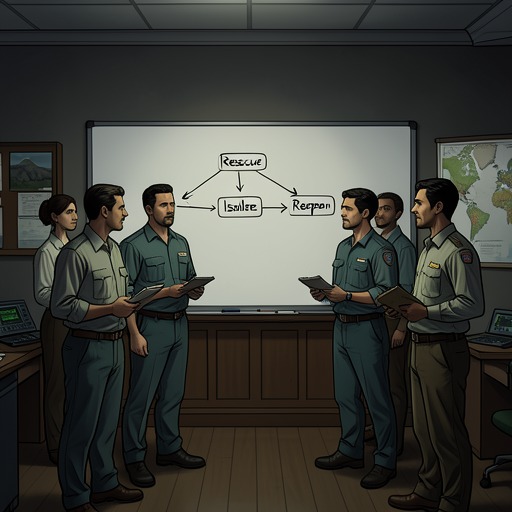
Emergency calls have increased, and families report that their deceased relatives have returned home. Older bodies roam the streets of [Stockholm](entity:location-recall-location-stockholm-ecdf20d7e75e). The government established a Death Command Center, calling back-to-life individuals who return as "resurrections." Due to insufficient police resources and legal restrictions preventing police from working with the military
14 August 2002 at 02:56
Eva Speaks at Solna
After Eva was transferred to [Solna](entity:location-recall-location-70c2998c4785) for research, neurologist Thomas Berglund interviewed her. She could recognize herself as Eva but her answers showed that identity had fragmented: she insisted that Eva wasn't here and then admitted that she was. She could see and hear through this body, yet said that
14 August 2002 in the morning
David Tells Magnus
After a sleepless night, [David](entity:character-recall-character-david-a0465b0b2f3d) picked [Magnus](entity:character-recall-character-magnus-098304000edd) up and tried to explain that Eva had been in an accident and would be away while doctors helped her. He could not tell his son the whole truth, and he gave him false reassurance that Eva would soon be well.
Magnus saw newspaper headlines about the dead returning. David bought the papers and read [Gustav Mahler](entity:character-recall-character-gustav-mahler-d6f10fb0d72a)’s report from inside the morgue, especially its argument that decisions about the [returned dead](entity:character-recall-character-f17f0f20843a) should not belong to the state alone. David recognized that the matter was about love and set out to find Eva.
14 August 2002 in the morning
Mahler Cares for Elias
At home in [Vällingby](entity:location-recall-location-56cafc85c0e1), [Gustav Mahler](entity:character-recall-character-gustav-mahler-d6f10fb0d72a) bathed [Elias](entity:character-recall-character-elias-a05c0dc697ed) and tried to soften his leathery skin with lotion. Remembering accounts of Haitian zombies, he mixed salt into water and fed the solution to Elias with a syringe. Elias swallowed, giving Mahler the first small sign that he could still respond to care.
[Anna](entity:character-recall-character-anna-ea2421a71401) arrived after learning that Elias’s grave had been disturbed. Mahler told her that Elias was alive but dead, and she went to see him. She emerged believing that the boy she knew was gone, though she agreed that they should care for the body. Their different understandings of Elias began to shape the difficult partnership ahead.
14 August 2002 before dawn
The Military Opens the Graves
At [Stockholm Woodland Cemetery](entity:location-recall-location-stockholm-woodland-c-1e82a2547c3a), military personnel opened graves and found the [returned dead](entity:character-recall-character-f17f0f20843a) struggling to escape. A newspaper account described the bodies’ advanced decomposition, the soldiers’ distress, and a hurried enclosure built to hold them. The operation quickly descended into confusion and physical conflict.
The military’s work confirmed that the awakening was not confined to hospital morgues. Meanwhile, Mahler’s report reached the press, and he took [Elias](entity:character-recall-character-elias-a05c0dc697ed) away rather than surrender him to the authorities. The public learned of the crisis through images of exhumations even as families remained separated from their returned loved ones.
14 August 2002 morning
The Ban on Funerals
The government prohibited burials and cremations while officials tried to determine why some people returned and others did not. Investigators found that the boundary appeared to be about two months after death, and they struggled to provide enough space for the thousands of newly awakened bodies.
The official response treated the reliving as a public-health and security problem. Families were told that visits would have to wait, while the press and public argued over whether the returned should be examined, contained, or cared for as people. The uncertainty deepened the conflict between authority and personal attachment.
14 August 2002 just after midnight
Elvy’s Religious Hope
After the call about the returning dead, [Elvy](entity:character-recall-character-elvy-5e57cc9fd61c) took the awakening as confirmation that her faith was true. She told [Flora](entity:character-recall-character-flora-c1b11a6eb9e1) that a soul existed beyond the body and that the night had provided proof. Flora, an atheist, responded by trying to reason through whether [Tore](entity:character-recall-character-tore-e879f8fbe2df) had truly died and what could have brought him back.
Elvy and Flora called for an ambulance, but the emergency services warned that they had many cases and did not know how to handle the returned. Elvy’s first excitement at the apparent [Resurrection](entity:concept-recall-concept-the-resurrection-fcedfbd28b80) coexisted with the frightening reality of Tore’s body moving through her home.
14 August 2002 early morning
Anna Finds Mahler’s Apartment
After Mahler left [Elias](entity:character-recall-character-elias-a05c0dc697ed)’s grave, he brought the child’s mummified body home. He lay beside Elias and tried to offer him water and comfort, but had no sense of what might restore him. When [Anna](entity:character-recall-character-anna-ea2421a71401) called, Mahler told her that Elias had been found and was with him.
Anna arrived and saw the body for herself. She insisted that Elias no longer existed as the child she loved, even while agreeing to care for him. Mahler was hurt by her judgment but could not deny the truth of what she saw. Their grief took different forms: his pursued recovery, while hers guarded the memories of her son.
14 August 2002 at about 08:45
David Is Turned Away
[David](entity:character-recall-character-david-a0465b0b2f3d) went to the Medical Examiner’s Department to see Eva, but toxicologist Elisabeth Simonsson refused to let him enter while examinations were under way. She explained that the reliving had been isolated and that the investigators were testing for unknown substances, not performing an autopsy.
David was furious that scientific caution and the danger of bacteria could keep him from his wife. He left promising to do something, still unable to accept the state’s claim over the body. His confrontation made the central question immediate: whether Eva belonged to her family or to the authorities studying the phenomenon.
14 August 2002 late morning
Elvy Hears Mary
[Elvy](entity:character-recall-character-elvy-5e57cc9fd61c) watched the news in anger as political leaders and clergy discussed the [returned dead](entity:character-recall-character-f17f0f20843a) without openly naming the [Resurrection](entity:concept-recall-concept-the-resurrection-fcedfbd28b80). She had hoped the event would be recognized as a spiritual sign, but instead heard official language focused on care and public order.
As she drifted to sleep, her television blazed with light and the [Virgin Mary](entity:character-recall-character-bf722a49f9cd) appeared. Mary gave Elvy a mission: the dead must come to her, and Elvy must make people understand. A small cut appeared on Elvy’s forehead where the apparition had touched her, leaving her with a physical sign and a task she could not yet explain.
14 August 2002 around midday
Mahler and Anna Flee
[Police](entity:organization-recall-organization-police-ff49ac86d5d5) and a doctor searched [Anna](entity:character-recall-character-anna-ea2421a71401)’s apartment and demanded that [Elias](entity:character-recall-character-elias-a05c0dc697ed) be handed over under emergency epidemic measures. Mahler realized that the authorities would keep searching and decided to take Elias and Anna to the family’s summer cottage at [Koholma](entity:location-recall-location-koholma-75ca63b2aedf).
Anna challenged her father’s authority, accusing him of treating her as a burden and of caring for her to ease his own guilt. The argument exposed years of estrangement, but they came to a truce and left together. At the cottage, Anna began helping Elias drink from a baby bottle, and his hands moved enough to hold it.
14 August 2002 before dawn
Flora Returns to Peter
[Flora](entity:character-recall-character-flora-c1b11a6eb9e1) left [Elvy](entity:character-recall-character-elvy-5e57cc9fd61c)’s home and crossed the neglected Heath to find [Peter](entity:character-recall-character-peter-22e18a2305ec), her friend who lived in a concealed room within an unfinished housing development. On the way, a lonely, intoxicated man asked her for a hug and spoke about the daughter he had lost. Flora rejected him but recognized the grief beneath his disarray.
In Peter’s small refuge, she described the night’s events and learned that he accepted the upheaval without surprise. Their closeness offered her a break from the conventional world that had never felt bearable. She did not yet understand how important Peter’s own encounter with a frightening presence would become.
14 August 2002 at about 09:00
The World Goes On
[Flora and Peter](entity:relation-recall-relation-flora-and-peter-1da5904d90d7) bought newspapers and watched the headlines proclaim that thousands of Swedes had returned from the dead. The streets around them looked almost ordinary: people went to work and filled their cars, while the newspapers supplied the only visible evidence that the world had changed.
[Flora](entity:character-recall-character-flora-c1b11a6eb9e1) felt disappointed that the crisis seemed to be becoming just another story. She had imagined a rupture in ordinary life, not a new headline followed by routine. [Peter](entity:character-recall-character-peter-22e18a2305ec), by contrast, thought it was strange only that such an event had not happened earlier.
14 August 2002 morning
David Faces the Headlines
[David](entity:character-recall-character-david-a0465b0b2f3d) took [Magnus](entity:character-recall-character-magnus-098304000edd) to school and told him that Eva had been in an accident. When Magnus saw the headlines, he asked whether the story about the dead returning was true. David could only answer that he did not know, then offered more evasions to keep his son from learning how badly Eva had changed.
Other parents recognized David from the news and offered condolences, making his private crisis public. He felt rage at their talk of zombies and horror films, then read Mahler’s appeal for families to have a say in what happened to the returned. He decided to go to [Solna](entity:location-recall-location-70c2998c4785) and find Eva.
14 August 2002 morning
Eva’s Recovery and the Research
The [returned dead](entity:character-recall-character-f17f0f20843a) displayed faint brain activity, and doctors began testing whether they needed food, warmth, or conventional medical support. A televised debate exposed the conflict between scientific caution, religious explanations, and the strange reports of thought-reading around groups of the reliving.
[David](entity:character-recall-character-david-a0465b0b2f3d) later learned that Eva had been moved to the Medical Examiner’s Department. Mahler, meanwhile, discovered that salt water seemed to produce a response from [Elias](entity:character-recall-character-elias-a05c0dc697ed). Different families and researchers were asking the same question from opposite directions: what remained of a person after the body returned?
15–16 August 2002
The Government Relocates the Dead
As the number of reliving overwhelmed [Danderyd Hospital](entity:location-recall-location-danderyd-hospital-1abc184c4c0a), staff struggled with exhaustion and conflict. A metronome briefly calmed the patients, but they dismantled it. Officials decided to move the returned to [The Heath](entity:location-recall-location-the-heath-41a5c074fb4d), an unfinished housing estate where they could be separated and housed away from other patients.
The government announced the relocation as a form of care, but it also imposed isolation and restricted visits. [Sten Bergwall](entity:character-recall-character-sten-bergwall-b08b2125a500), who had helped direct the response, privately warned that the reliving were not mindless vegetables: their behavior reflected the thoughts around them, and releasing them into the terror of the public could end in catastrophe.
14–15 August 2002
Elias Begins to Respond
At [Koholma](entity:location-recall-location-koholma-75ca63b2aedf), Mahler tried exercises from a book about autism and play, hoping to restore [Elias](entity:character-recall-character-elias-a05c0dc697ed) through familiar toys. [Anna](entity:character-recall-character-anna-ea2421a71401) stayed close but resisted treating her son as a training problem. The first major response came when a remote-controlled car crossed the room: Elias followed it, reached for it, and struggled out of bed to pursue it.
The sight filled Mahler with hope, but Elias seized the car and tore it apart instead of playing with it. Anna believed he was curious about how it worked. Their disagreement exposed the gap between Mahler’s desire to rebuild Elias through exercises and Anna’s sense that she could understand him in a way her father could not.
14 August evening
Elvy Begins to Preach
[Elvy](entity:character-recall-character-elvy-5e57cc9fd61c) and [Hagar](entity:character-recall-character-hagar-6aabd7f815fa) went from house to house, urging neighbors to turn toward Jesus Christ because the dead had returned. Elvy believed that Mary’s message had made the meaning of the crisis clear, and Hagar supported her with an enthusiasm that sometimes seemed lighter than Elvy thought the occasion deserved.
Their first attempts met with skepticism. Elvy’s mission was to bring people to faith, but she had no confidence that she knew how to do it. The two women nevertheless persisted, and their promise that Elvy’s home was open to anyone in need would soon draw frightened neighbors to her.
14 August after midnight
Tore’s Body Leaves Home
Paramedics arrived for [Tore](entity:character-recall-character-tore-e879f8fbe2df) and took him away in an ambulance. [Elvy](entity:character-recall-character-elvy-5e57cc9fd61c) had begun to feel the force of a presence in the air, and as the vehicle left she sensed a distressed voice asking to stay home. She also glimpsed a slender dark-haired woman with something metallic between her fingers.
The vision disappeared with a sudden surge of pain. Elvy tried to reach [Flora](entity:character-recall-character-flora-c1b11a6eb9e1) by phone but could not get through. Her experience suggested that the returned were not simply physical bodies: something unseen was trying to communicate through them, and something else was hunting or collecting what remained.
14 August morning
Elias Drinks and Holds On
Mahler gave [Elias](entity:character-recall-character-elias-a05c0dc697ed) salt water through a syringe, and Elias swallowed it. The small response let Mahler feel useful for the first time since Elias’s return. [Anna](entity:character-recall-character-anna-ea2421a71401) later put dextrose water into a baby bottle, and Elias’s lips closed around the teat as he sucked.
Mahler initially treated this as proof that his care was working, while Anna felt the moment as a fragile connection with her son. The body was still damaged and unresponsive in most ways, but the family began to hope that Elias could learn, change, or communicate through the few impulses he retained.
17 August at noon
The Heath Opens to Families
After days of government secrecy and public pressure, officials opened [The Heath](entity:location-recall-location-the-heath-41a5c074fb4d) to relatives of the reliving. [David](entity:character-recall-character-david-a0465b0b2f3d) arrived with [Magnus](entity:character-recall-character-magnus-098304000edd) and [Sture](entity:character-recall-character-sture-9d1f833bdd7d), carrying the rabbit [Balthazar](entity:character-recall-character-balthazar-e1ba24d97ac9) as a birthday gift for Magnus. The crowd outside the fence resembled an audience waiting for a spectacle, an atmosphere David found indecent.
Officials warned visitors that the reliving could create a thought field in which people heard one another’s thoughts. Inside, David found the warning accurate: fear, confusion, and private memories mingled with his own. He searched for Eva while Magnus struggled to manage the crowded minds around him.
17 August shortly after noon
Flora Sees the Returning Dead
[Flora](entity:character-recall-character-flora-c1b11a6eb9e1) entered [The Heath](entity:location-recall-location-the-heath-41a5c074fb4d) without authorization and felt the field intensify as she approached the apartments. Inside, she saw a returned person watching a toy frog hop until it stopped, then winding it up again. The scene made the housing estate seem less like a place of rehabilitation than a new kind of grave.
As she rested in a courtyard, the force in her head shifted into a piercing whine. Against an instinctive pressure not to look, Flora saw a double of herself crossing the yard in the sneakers she had lost. The encounter suggested that the force was not merely a projection of her imagination, but an entity connected to death.
17 August around 13:00
Eva Meets Her Family
[David](entity:character-recall-character-david-a0465b0b2f3d), [Magnus](entity:character-recall-character-magnus-098304000edd), and [Sture](entity:character-recall-character-sture-9d1f833bdd7d) found Eva in apartment 17C. She could speak more clearly than before and greeted them as her family, but David could feel no presence from her in the thought field. Her eye had improved, while the injuries to her body remained severe.
Magnus showed Eva [Balthazar](entity:character-recall-character-balthazar-e1ba24d97ac9) and told her it was his birthday. Eva answered his questions in a calm, mechanical way. David wanted to believe that the woman he loved was returning, but he could sense that her responses were not the same as the intimate, living person he remembered.
17 August shortly after 13:00
Balthazar’s Death
When [Balthazar](entity:character-recall-character-balthazar-e1ba24d97ac9) hopped onto Eva’s lap, she caught him and tore off his head. [Magnus](entity:character-recall-character-magnus-098304000edd) screamed and struck her, while [David](entity:character-recall-character-david-a0465b0b2f3d) pulled him away. The rabbit’s body continued to twitch, and Eva examined the head with detached curiosity, showing no recognition of the horror she had caused.
[Sture](entity:character-recall-character-sture-9d1f833bdd7d) gave Eva the wooden dolls he had carved when she was a child, hoping to reach her through a remembered connection. She recognized the figures as Eva and David, but her voice sounded like an imitation of Eva rather than the woman they knew. [David and Sture](entity:relation-recall-relation-david-and-sture-0750f3de01f2) left with Magnus, devastated by the reunion’s brutality.
17 August around 13:15
The Heath Field Erupts
As relatives confronted the returned, the field in [The Heath](entity:location-recall-location-the-heath-41a5c074fb4d) grew unbearable. Fear and revulsion fed the reliving’s agitation; the living and dead intensified each other’s distress until people began to panic, break windows, and attack. The authorities had failed to account for how emotion itself could make the situation worse.
[Police](entity:organization-recall-organization-police-ff49ac86d5d5) and medical workers evacuated the estate after several people were injured. [Flora](entity:character-recall-character-flora-c1b11a6eb9e1) had been overlooked during the retreat and remained inside. She understood that the crisis was not simply the returned turning violent: the terror of the living had become part of the force driving them.
17 August evening
The Dead Dance
After the evacuation, [Flora and Peter](entity:relation-recall-relation-flora-and-peter-1da5904d90d7) moved through [The Heath](entity:location-recall-location-the-heath-41a5c074fb4d), where the returned had gathered in the courtyards. They watched a group circle a lamppost in a slow, repetitive dance, while other faces appeared at the windows. The scene felt to [Flora](entity:character-recall-character-flora-c1b11a6eb9e1) like an ancient rite, a pattern of movement that held the dead together.
The dead seemed peaceful until a group of drunken young men entered with baseball bats. Their minds were full of hatred and fantasies drawn from zombie films. Flora tried to stop them, but their violence was already building the same force that would soon overwhelm the entire estate.
17 August night
The Courtyard Attack and Fire
The young men battered the dancing dead and laughed as they broke bodies that kept crawling toward them. One man was bitten, panicked, and soaked the heap with fuel before setting it alight. [Flora](entity:character-recall-character-flora-c1b11a6eb9e1) was paralyzed by the men’s violence and could not intervene in time.
Her double appeared across the courtyard, arms open as if gathering something from the dying. Flora recognized the image as Death, and saw white caterpillars emerge from the burned bodies: the human element of the dead, now lost without their hosts. The souls that were not collected swelled and burst, vanishing into an unknowable elsewhere.
17 August night
Elvy Understands the Mission
[Flora](entity:character-recall-character-flora-c1b11a6eb9e1) called [Elvy](entity:character-recall-character-elvy-5e57cc9fd61c) and told her what she had witnessed: the violent young men had destroyed the dead, and the caterpillar-like human elements were being lost. Elvy had understood Mary’s words as a call to save the living through religious conversion. Flora realized that the message meant the dead must come to Mary before their remaining essence vanished.
Elvy agreed to come to [The Heath](entity:location-recall-location-the-heath-41a5c074fb4d) at once. The revelation gave her mission a concrete urgency, but the night was already turning toward further violence. Flora knew that she and her grandmother would have to act before the authorities or the crowd made the situation irreversible.
17 August before the flight
Mahler’s Training Fails
Mahler tried to teach [Elias](entity:character-recall-character-elias-a05c0dc697ed) to imitate a simple action with a battery-powered train. Elias ignored the exercise and broke the toy apart. Mahler’s frustration rose until he shouted at the child, asking why he had to destroy everything.
Elias threw the train at Mahler and then collapsed. A high, drilling whine filled Mahler’s skull, and he sensed that someone unseen had been present. [Anna](entity:character-recall-character-anna-ea2421a71401) rebuked him for disliking Elias, insisting that her father’s feelings affected the boy. Mahler could not yet accept that the reliving responded to the thoughts directed at them.
17 August evening
The Fisher in Eva’s Past
After the Heath catastrophe, [Sture](entity:character-recall-character-sture-9d1f833bdd7d) explained that Eva had nearly drowned as a child. During her recovery, she described a creature beneath the water that had tried to take her. The family had once called it the Fisher, though Eva later used the name Waterman or avoided naming it altogether.
[David and Sture](entity:relation-recall-relation-david-and-sture-0750f3de01f2) searched through Eva’s childhood drawings and found one dated 1975. It showed a smiling little girl underwater beside a shifting, faceless figure with hooked fingers. The drawing connected Eva’s current fear of the Fisher to an encounter that had shaped her life long before the [returned dead](entity:character-recall-character-f17f0f20843a) appeared.
17 August evening
Mahler’s Flight to the Island
After Aronsson discovered [Elias](entity:character-recall-character-elias-a05c0dc697ed) at [Koholma](entity:location-recall-location-koholma-75ca63b2aedf), Mahler and [Anna](entity:character-recall-character-anna-ea2421a71401) fled with the child in a small boat. Mahler steered toward [Labbskar Island](entity:location-recall-location-labbskar-island-45e473e25dd4), hoping to hide in a remote cottage. A military helicopter passed overhead, while Anna and Mahler communicated through the new thought-reading connection that had opened between them.
They reached the island and broke into an unused cabin, only to find no fresh water and no reliable provisions. Mahler had to return to the mainland for supplies, leaving [Anna and Elias](entity:relation-recall-relation-anna-and-elias-f2162004ec29) alone. The island promised refuge but also exposed how little control the family had over their circumstances.
17 August night
Anna Faces the Drowned Man
While alone with [Elias](entity:character-recall-character-elias-a05c0dc697ed), [Anna](entity:character-recall-character-anna-ea2421a71401) saw a drowned body at the cabin window. The corpse was swollen, fish-eaten, and eyeless, and it tried to force its way inside. Anna resisted it with an axe nearby, while Elias’s frightened voice reached her through their connection.
The drowned man withdrew, but its presence showed that the dead were not all alike and that some could be driven by the living’s emotions. Anna understood that fear and disgust might have attracted it. The encounter left her guarding the door and fearing that the creature would return.
17 August late night
Elias Leaves Anna
Far out on the [Sea of Åland](entity:location-recall-location-0ea571a1ed18), [Anna](entity:character-recall-character-anna-ea2421a71401) answered a call from [David](entity:character-recall-character-david-a0465b0b2f3d), who was trying to reach Mahler. She learned that Eva had left her body and escaped the reliving state. Anna understood that [Elias](entity:character-recall-character-elias-a05c0dc697ed), too, would eventually have to leave, though she still feared losing him again.
She told Elias to remain with her until it was time. When the Fisher’s whine approached across the water, Anna first begged him to stay, then cupped the white caterpillar that emerged from his chest. She thought of him with love and let him go. The two families’ stories ended in parallel acts of release.
near the ending
The Families Face the Unknown
The [returned dead](entity:character-recall-character-f17f0f20843a) had exposed a world in which death could be interrupted but not undone. Their bodies moved, responded, and sometimes communicated, yet they were not simply the people their families remembered. Some departed through the Fisher’s hooks; others became lost when violence destroyed their bodies.
[David](entity:character-recall-character-david-a0465b0b2f3d) and [Anna](entity:character-recall-character-anna-ea2421a71401) each reached a painful form of acceptance by letting go of a loved one. [Flora and Elvy](entity:relation-recall-relation-flora-and-elvy-bf409e2b8c26) had glimpsed a larger order but could not explain it in ordinary terms. The novel closes with grief still present, yet with the possibility that love, memory, and release endure beyond the limits of the body.